
Why Social Media and Paid Advertising Work Better Together
Real-world lessons from building and managing complete online presences for small businesses
If you are a business owner, you have probably heard some version of this advice: post on social media, run ads, and make sure your website is working. All of that is true. What actually moves the needle, however, is how these pieces work together as a system.
Brooklyn Beach Design was not built as a “social-only” agency or an “ads-only” shop. It grew organically, through real client needs, real problems, and real conversations. That history shapes how we approach digital marketing today.
How this work actually started
The first client did not come from a pitch deck or a formal proposal. It started with a conversation at a garage sale.
During that conversation, a local business owner asked what I did for work. Not long after, he reached out because the original designer on his website project had walked away, leaving the site unfinished. I stepped in, rebuilt the website, and helped relaunch it properly.
A few months later, that same client asked a simple question: “Is there a way for me to post to Facebook and other platforms without spending all day on it?” That led to structured social media publishing.
Not long after that, another request followed: “Can you help respond to reviews and handle issues when they come up?” That became the foundation of our reputation management services.
From there, clients began asking for broader support: relaunching websites, creating new graphics and logos, managing advertising, and maintaining a consistent online presence across platforms. Brooklyn Beach Design grew by solving real problems and making sure every part of a business’s online presence worked together.
The website and SEO are the backbone of online growth
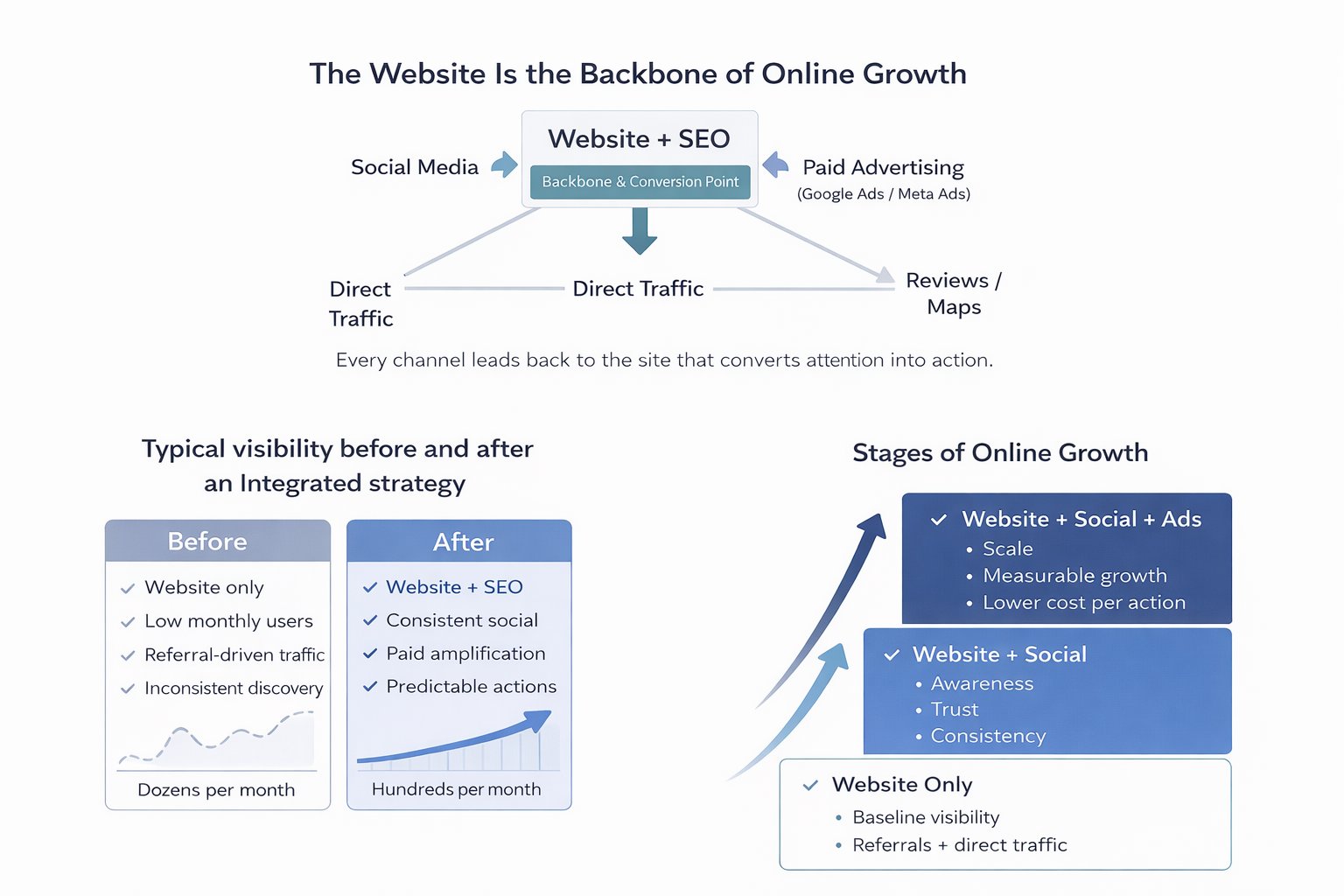
No matter how strong social media or advertising efforts are, a solid website with solid SEO is the foundation. Every channel eventually leads back to the website.
Social posts, Google Ads, Facebook and Instagram ads, map listings, and review platforms all point people to the same place: a website where they validate services, confirm credibility, and decide whether to take action.
- SEO helps customers find the right service pages from search and maps.
- A clear site structure helps people quickly confirm what you do and how to contact you.
- Fast load times and mobile-friendly layouts reduce drop-off from ads and social traffic.
Social media and paid advertising amplify growth, but the website is what captures and converts that attention.
The three stages of online visibility we see most often
Stage 1: Website only (no active marketing)
Many businesses start with a professional website but no ongoing marketing. Traffic comes mainly from referrals, word of mouth, and direct visits. Without anything actively pushing visibility, growth is limited.
What this typically looks like: low and inconsistent traffic, often just dozens of users per month, even when the business itself is solid.
Stage 2: Consistent social media (foundation building)
When a business adds structured social media publishing, visibility improves before leads do. This stage is about repetition, familiarity, and trust.
What this typically looks like: steadier discovery, increased engagement with service pages, and customers recognizing the business name before reaching out.
Stage 3: Social media and paid advertising (compounding growth)
When social media is paired with Google Ads and Meta (Facebook and Instagram) advertising, results accelerate. Paid ads create predictable reach and capture intent. Social media builds trust and recognition.
What this typically looks like: higher traffic, broader visibility, and more measurable customer actions such as calls, direction requests, form submissions, and bookings.
What we measure (in plain English)
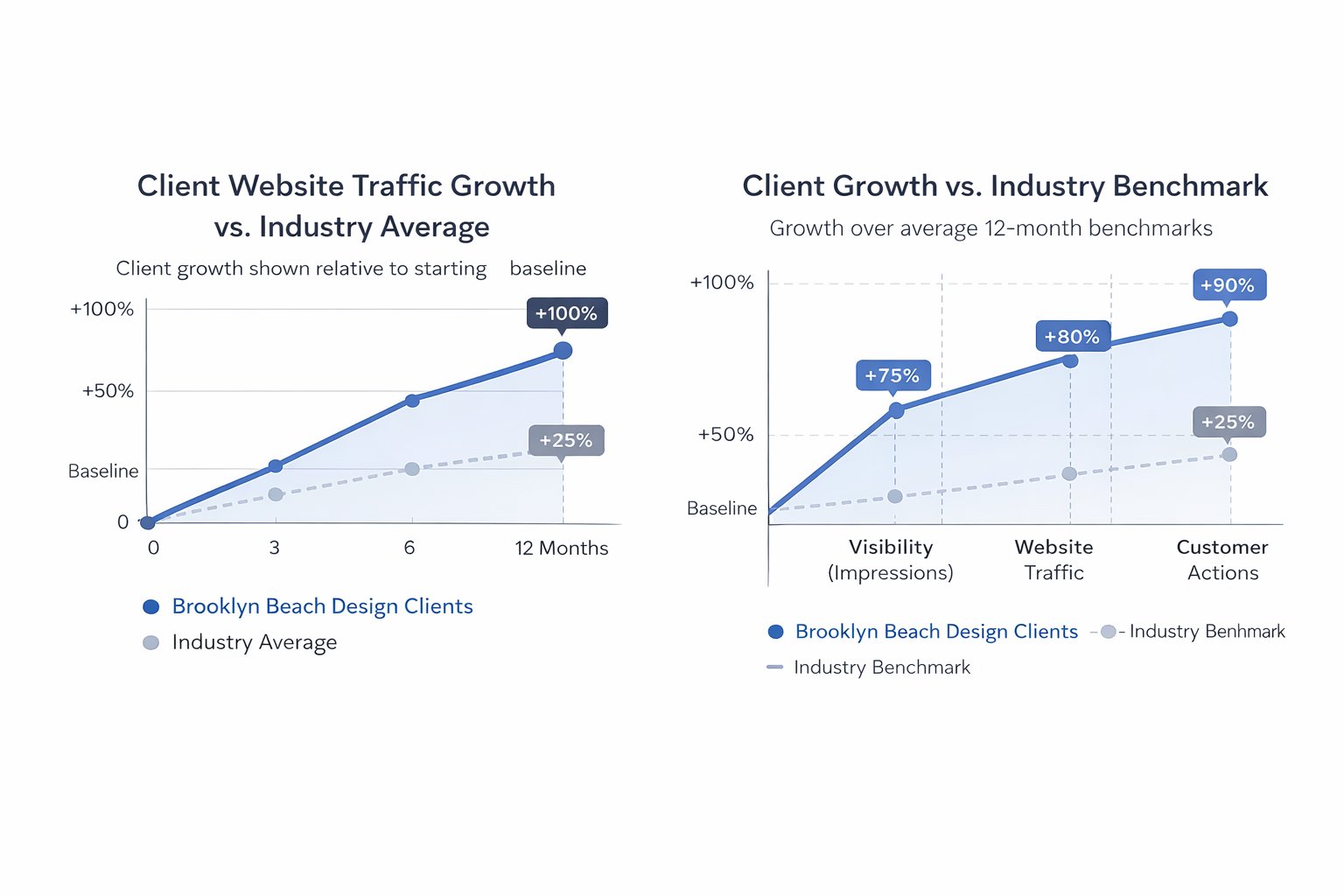
- Visibility: Are more people seeing the business?
- Traffic: Are more people reaching the website?
- Engagement: Are people interacting with services and content?
- Actions: Are people calling, requesting directions, or contacting the business?
The website sits at the center of all four. Strong SEO and site structure ensure that attention turns into action.
The takeaway
Brooklyn Beach Design was built by responding to real needs, not by forcing businesses into pre-packaged marketing solutions. Websites, SEO, social media, advertising, and reputation management work best when they support each other.
A solid website is the backbone. Social media builds trust. Paid advertising scales reach. When all three work together, growth becomes measurable and sustainable.